Tick the appliances you run, set the hours, and the calculator gives you four numbers: watt-hours a day, the amp-hour bank that covers it, the inverter that clears your biggest load, and the solar it would take to put the day back. Underneath each number are the two or three batteries and inverters in our data that actually make it — sized as a count, so “280Ah” reads as “three of these” or “two of those”.
The method is the one on the lithium sizing page and the inverter sizing page, with the arithmetic done for you: watts × hours → watt-hours → amp-hours → bank, with inverter losses, usable depth and your battery’s BMS limit applied where they belong. Every assumption is written out below the tool.
Step 1 of 3
Tick what you run, and for how long each day
Watts are typical figures — change any of them to what your own appliance label says. Hours are per day of boondocking. Leave anything you do not use unticked.
| Include | Appliance | Watts | Hours / day | Supply |
|---|---|---|---|---|
| 12-volt loads — run straight from the bank | ||||
| 12V | ||||
| Runs in bursts — a few minutes a day adds up to about 20 minutes | 12V | |||
| The blower, not the burner. Cold nights push this to 8 hours or more | 12V | |||
| Average draw over the day, compressor cycling included | 12V | |||
| 12V | ||||
| 12V | ||||
| 12V | ||||
| With the heated humidifier on, use 90W | 12V | |||
| 120-volt loads — through the inverter | ||||
| Compressor runs roughly a third of the day — 8 of 24 hours | 120V | |||
| 120V | ||||
| 120V | ||||
| 120V | ||||
| 120V | ||||
| A "1,000W" microwave draws about 1,500W from the outlet | 120V | |||
| 120V | ||||
| 120V | ||||
| 120V | ||||
| 120V | ||||
| 120V | ||||
| The single fastest way to empty a battery bank | 120V | |||
| Start surge is huge without a soft starter — see the guide linked below | 120V | |||
| Anything else — type it in | ||||
Step 2 of 3
How you camp
Step 3 of 3 — your numbers
Batteries that make this bank
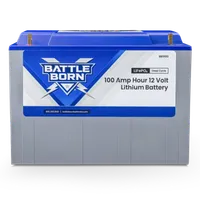
Battle Born 100Ah 12V LiFePO4 Deep Cycle Battery
100Ah · 100A BMS · 31 lb · Replaces Group 27 and Group 31
Check price at Battle Born Batteries(opens in a new tab)
Battle Born 100Ah 12V Heated LiFePO4 Deep Cycle Battery Kit
100Ah · 100A BMS · 31 lb · self-heating · Replaces Group 27 and Group 31
Check price at Battle Born Batteries(opens in a new tab)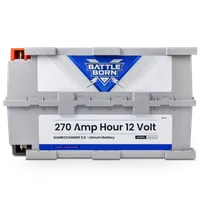
Battle Born 270Ah 12V GC3 LiFePO4 Deep Cycle Battery
270Ah · 300A BMS · 80.8 lb · GC3
Check price at Battle Born Batteries(opens in a new tab)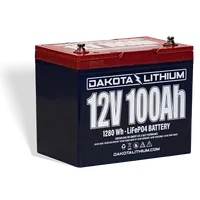
Dakota Lithium 12V 100Ah Deep Cycle Heated LiFePO4 Battery
100Ah · 100A BMS · 27.55 lb · self-heating · Group 24
Check price at Dakota Lithium(opens in a new tab)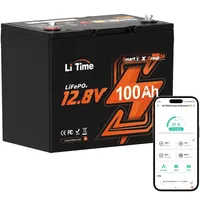
LiTime 12V 100Ah Group 24 Bluetooth LiFePO4 Battery
100Ah · 100A BMS · 21.9 lb · Group 24
Check price at Amazon(opens in a new tab)
Renogy 12 Volt 100Ah Deep Cycle AGM Battery
100Ah · AGM · 50% usable · 63.9 lb
Check price at Amazon(opens in a new tab)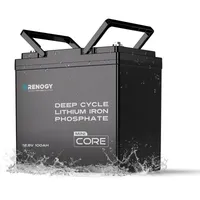
Renogy Core Mini 12V 100Ah LiFePO4 Battery
100Ah · 100A BMS · 22.7 lb · Group 22NF
Check price at Amazon(opens in a new tab)Inverters that clear your peak
GIANDEL 2200W 12V Pure Sine Wave Power Inverter
2200W continuous · 4400W surge · pure sine
Check price at GIANDEL(opens in a new tab)Go Power! GP-ISW3000-12 Industrial Pure Sine Wave Inverter
3000W continuous · 6000W surge · pure sine
Check price at Go Power!(opens in a new tab)Krieger KR2000 2000W 12V Power Inverter
2000W continuous · 4000W surge · modified sine
Check price at Krieger(opens in a new tab)Renogy 2000W 12V Pure Sine Wave Inverter
2000W continuous · 4000W surge · pure sine
Check price at Renogy(opens in a new tab)Renogy 3000W 12V Pure Sine Wave Inverter
3000W continuous · 6000W surge · pure sine
Check price at Renogy(opens in a new tab)Victron Energy MultiPlus 12/3000/120-50 120V Inverter/Charger
2400W continuous · 6000W surge · pure sine · built-in charger + transfer switch
Check price at Victron Energy(opens in a new tab)Xantrex Freedom XC 2000 True Sine Wave Inverter/Charger
2000W continuous · 4000W surge · pure sine · built-in charger + transfer switch
Check price at Xantrex(opens in a new tab)Sizing figures are arithmetic on the numbers you entered and the manufacturers' published capacities — not a test result. Where a battery's continuous BMS rating is stated as a range, the lower figure is used. Read the guide below for what the numbers assume.
What the calculator is actually doing
Nothing exotic — this is the arithmetic every honest sizing guide describes and then leaves to you. Written out, so you can check it or do it by hand:
- Watt-hours per appliance = watts × hours per day. Anything on the 12V side is added as-is.
- 120V loads cost more than their label, because the inverter loses some of what it converts. Renogy publishes at least 85% efficiency at full load on its inverters, so every 120V watt-hour is divided by 0.85 before it goes on the bill — a 1,000Wh day at the outlets is 1,176Wh from the bank.
- Amp-hours per day = watt-hours ÷ bank voltage. Lithium is worked at 12.8V (the nominal figure on the LiTime and Renogy data sheets); AGM at 12V.
- Bank size = amp-hours × days between charges ÷ usable fraction. Lithium is treated as 90% usable — Battle Born publishes 100%, and the last 10% is held back so a plan that reaches “full” is not a plan that reaches empty. AGM is 50%, the depth below which lead acid ages fast. The result rounds up to the nearest 10Ah.
- Inverter size = your single largest 120V load, plus the second largest if you tick that you run two at once, with 20% headroom on top, rounded to the next 100W. Start-up surge is checked separately against the inverter’s published surge rating — a residential fridge compressor is modelled at 3× running draw and a roof air conditioner at 3.5×.
- The BMS ceiling. That peak, after inverter losses, is turned into amps at 12V. Every lithium battery has a continuous discharge limit — 100A on most 100Ah units, 300A on the Battle Born GC3 — and the number of batteries shown is the larger of what your amp-hours need and what that current needs. This is the step the sizing charts skip, and it is why a 1,500W microwave on a single 100Ah battery trips the BMS.
- Solar to replace the day = watt-hours ÷ 0.9 for charging losses ÷ (peak sun hours × 0.75 for real-world panel output), rounded up to 10W.
Where a manufacturer states a range — Victron gives its 100Ah battery as “200A maximum, 100A recommended” — the lower figure is used.
Finding the watts for your own appliances
The presets are typical values, and typical is not yours. Three ways to replace them with real numbers, in order of accuracy:
- The label. Every 120V appliance carries a rating plate. If it gives watts, use that. If it gives amps, multiply by 120 (or by 12 for a 12V device). A “1,000W” microwave is the exception worth knowing: that is its cooking power, and it draws around 1,500W from the outlet.
- A plug-in meter. A Kill-A-Watt or similar on a 120V appliance shows running watts and — left in for a day — the watt-hours it actually used, duty cycle included. That single reading replaces the guessed hours for a fridge, and it is the best $30 in RV electrical planning.
- A shunt battery monitor, if you already have one, tells you the whole rig’s daily draw in one number, which is the answer the top of the calculator is trying to reconstruct.
How much power an RV uses in a day
Four profiles, using the calculator’s own presets and rounding, so you can see where your rig is likely to land before you touch a checkbox. All at 12V.
| Profile | What is running | Wh / day | Ah / day | 2-day lithium bank | 2-day AGM bank |
|---|---|---|---|---|---|
| Weekend trailer, propane fridge | LED lights, water pump, furnace fan 4h, phones | ~480 | ~37 | 90Ah — one 100Ah | 160Ah — two 100Ah |
| Van with a 12V fridge | The above plus a 12V compressor fridge, fans | ~1,800 | ~140 | 320Ah — four 100Ah or two GC3 | 600Ah — six 100Ah |
| Remote worker | Weekend trailer plus Starlink 8h, laptop 3h through the inverter | ~1,110 | ~87 | 200Ah — two 100Ah | 370Ah — four 100Ah |
| Full-timer, residential fridge | Everything: fridge, TV, laptop, coffee maker, microwave, fans | ~3,200 | ~250 | 560Ah — six 100Ah or three GC3 | 1,070Ah — eleven 100Ah |
The right-hand columns are why the chemistry choice comes before the capacity choice. Eleven 100Ah AGM batteries at 64 lb each is 700 lb of lead; the equivalent lithium bank is under 200 lb. Below about a weekend-trailer load, AGM’s lower price still makes sense; above it, the weight and the tray space stop being available.
Lithium or AGM changes the number by half
Two things happen when you switch the chemistry toggle, and both are in the data sheets rather than the marketing:
Usable depth. Battle Born publishes 100% depth of discharge on the BB10012 and the GC3; LiTime publishes the same on its Group 24 100Ah. Lead acid manufacturers publish cycle-life curves that fall off a cliff below about 50%. So 100Ah of lithium is roughly 90 usable amp-hours in this calculator, and 100Ah of AGM is 50. Same rated capacity, half the bank.
Weight per usable amp-hour. The Renogy 100Ah AGM in our data is 63.9 lb; the LiTime 100Ah is 21.9 lb, the Dakota Lithium heated 100Ah is 27.6 lb, and the Battle Born BB10012 is 31 lb. Per usable amp-hour, lithium is between four and six times lighter — a difference that shows up on the tongue weight of a trailer and the payload of a van.
The full comparison, including cold-weather charging and the converter that almost always needs replacing with the batteries, is in lithium vs AGM for RVs. The short version for this page: run the calculator in AGM first if you want to see why most people who size a bank end up buying lithium.
The inverter comes from the same list — but a different number
Daily watt-hours size the bank. Peak watts size the inverter, and the two are almost unrelated. A coffee maker is 250Wh a day — nothing — but 1,000W for the four minutes it runs, which is what the inverter has to deliver. That is why the tool asks about your biggest load and whether you stack two, not about your total.
Three consequences that the shortlist reflects:
- 2,000W is the workhorse size, because everything with a heating element — coffee maker, microwave, toaster, induction burner, hair dryer — lives in the 1,000–1,800W band. Tick any one of them and the calculator lands at 1,800–2,200W and offers the 2,000W class.
- Ticking “two big loads at once” jumps you to 3,000W, and the battery count often jumps with it, because a 3,000W inverter near full output pulls around 275A from a 12V bank and needs 300A of BMS to feed it — three 100Ah batteries in parallel, or one GC3.
- No 120V loads, no inverter. If your list is lights, pump, furnace and a 12V fridge, the calculator says so and puts the money into capacity. Plenty of trailers run for years this way.
The shortlist is pure sine wave only unless you tick the box, because CPAPs, laptops and anything with a motor or a charger inside it prefer it — the pure sine question has the detail. And the surge check uses each maker’s published figure — Renogy’s 4,000W and 6,000W surge ratings are for one second, Xantrex’s 4,000W for five — which is why a roof air conditioner, at roughly 5,000W of start surge without a soft starter, drops most of the list. That is a separate guide with its own answer.
The solar line, and what it does not do
The last number is how many watts of panel would put a day’s use back in a day, at the sun hours you picked: watt-hours ÷ 0.9 for controller and charge losses ÷ (sun hours × 0.75 for the difference between a panel’s nameplate and what a flat roof-mounted panel produces on average). A 480Wh weekend day in five-sun-hour weather comes to about 150W of panel; a 3,200Wh full-timer day comes to about 950W, which is most of a roof.
It is a break-even figure, not a bank size. Solar does not shrink the bank you need for a run of grey days; it decides how many of those days you can string together. Treat it as the second question, after the bank — and note that a bank sized for one day of autonomy is a bet that the panels deliver tomorrow.
Three worked examples, by hand
The same arithmetic the calculator runs, on paper, so you can see that nothing is hidden.
A weekend trailer with a propane fridge. LED lights 20W × 5h = 100Wh; water pump 60W × 0.3h = 18Wh; furnace fan 80W × 4h = 320Wh; phones 10W × 4h = 40Wh. Total 478Wh, all 12V, so no inverter losses. ÷ 12.8V = 37Ah a day. Two nights ÷ 0.9 usable = 83Ah, rounded to 90Ah — one 100Ah lithium battery, with about a day in hand. In AGM: 478 ÷ 12 = 40Ah; × 2 ÷ 0.5 = 160Ah, so two 100Ah AGM batteries and 128 lb of lead for the same two nights.
A full-timer with a residential fridge, one day between charges. The weekend loads plus fans (30W × 8h = 240Wh) make 718Wh on the 12V side. On the 120V side: fridge 150W × 8h = 1,200Wh; TV 80W × 3h = 240Wh; laptop 65W × 3h = 195Wh; coffee maker 1,000W × 0.25h = 250Wh; microwave 1,500W × 0.15h = 225Wh — 2,110Wh at the outlets, ÷ 0.85 = 2,482Wh from the bank. Total 3,200Wh a day; ÷ 12.8 = 250Ah; one day ÷ 0.9 = 278, rounded to 280Ah. Peak is the microwave at 1,500W, × 1.2 = 1,800W of inverter — the 2,000W class — and 1,500 ÷ 0.85 ÷ 12.8 = 138A from the bank, plus about 15A of 12V loads: 153A. Three 100Ah batteries clear both the amp-hours (300Ah) and the current (300A of BMS); two GC3s clear it with 540Ah and 600A. Add about 950W of solar to make the one-day autonomy honest.
A CPAP user in a van, two days. Lights, pump and phones as before (158Wh) plus a 12V compressor fridge at 45W × 24h = 1,080Wh and a 12V CPAP without humidifier at 40W × 8h = 320Wh. Total 1,558Wh, all 12V; ÷ 12.8 = 122Ah a day; × 2 ÷ 0.9 = 270, rounded to 280Ah — three 100Ah lithium batteries, or two GC3s if there is one place to put 160 lb. Switch the CPAP to its 120V brick with the humidifier on (90W × 8h ÷ 0.85 = 847Wh) and the two-day bank becomes 370Ah. That single change is why the calculator lists the CPAP both ways.
Six ways the number goes wrong
- Sizing by the appliance’s amps at 120V. A 12.5A microwave is not 12.5A from the battery — at 12V it is about 138A. Work in watts, then convert once at the bank voltage.
- Forgetting the inverter’s idle draw. 24–30W of standby on a 2,000W or 3,000W inverter is 575–720Wh over 24 hours if it stays on. Add it as a custom row, or switch the inverter off when nothing needs it.
- Counting a fridge at its running watts for 24 hours. That triples the fridge line. Use the duty cycle, or better, a plug-in meter for a day.
- AGM at 100% depth. Every AGM sizing on the internet that looks surprisingly cheap is doing this. Fifty percent, and the bank doubles.
- Ignoring the BMS limit. Amp-hours are the easy half. If your inverter peak needs 154A and each battery passes 100A, two is the minimum however small the daily total is.
- Sizing the bank and not the charger. A 280Ah lithium bank fed by the 55A converter that came with the trailer takes five hours of generator to refill from empty, and many stock converters cannot reach lithium voltage at all — that is the converter question, and it usually gets bought in the same order.
What refills the bank you just sized
The calculator stops at capacity and one solar figure because the refill side depends on how you camp, but the parts are all sized from the same numbers:
- A converter or inverter/charger rated at roughly 0.2–0.5C of the bank — 60–80A for a 280Ah lithium bank, with a lithium charge profile. Best RV converters for lithium covers the deck-mount replacements; the inverter/charger route, where one box does both jobs, is in inverter vs inverter/charger.
- A DC-DC charger if you drive between camps and want the alternator to contribute — when you need one.
- Solar at or above the break-even figure the tool shows, with a controller sized to the panel array.
The batteries and inverters the calculator draws from
Everything the shortlist can show is on the two roundups, with the specification comparisons and the reasoning. These four cover most results:
The common 100Ah — one per 100Ah the calculator asks for
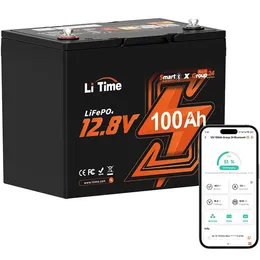
LiTime 100Ah Group 24 BT
1,280Wh, 100A BMS, 21.9 lb, Group 24. The battery most trailer trays were built around.
A big bank in one case
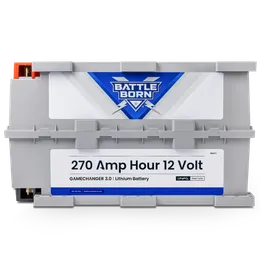
Battle Born BBGC3
270Ah and a 300A BMS from a single battery — feeds a 3,000W inverter without paralleling.
The workhorse inverter — 2,000W class
Renogy 2000W P2
Runs a microwave or coffee maker with margin; two 100A-BMS batteries feed it.
When the peak is over 2,000W
Renogy 3000W P2
The documented, buyable 3,000W unit — plan on 300A of BMS, 4/0 cable and a 400A fuse.
Related guides
- What size lithium battery do I need? — the physical-fit half of the question: group sizes and what goes in your tray.
- What size inverter do I need? — the three numbers behind the inverter figure, with the cable and fuse sizes.
- Best RV lithium batteries — the batteries the calculator draws from, compared on charge temperature, BMS current and warranty.
- Best RV inverters — the inverters, compared on surge window, idle draw and what the manual says about cable.
- 12V wire size calculator — once you know the inverter, this sizes the copper between it and the bank, which is a larger purchase than most people budget for.
- Victron SmartShunt vs BMV-712 — the two monitors most RV banks end up with, and why they measure identically.
- What size shunt for a battery monitor? — once the bank is sized, this is what it takes to actually see what it is doing, and the millivolt rating is the part that catches people.
- Battery charge time calculator — the same bank in the other direction: how long it takes to fill, and why the battery rather than the converter usually sets the pace.
- Can you run an RV air conditioner on batteries? — the one load this calculator deliberately makes look as hard as it is.
- Charging lithium in cold weather — why the “self-heating” tag on a result matters below freezing.
- RV amp draw calculator — the same appliance list, but plugged in: what 30 or 50 amp shore power will run at once.
- The electrical section collects everything published so far.
For how products on this site are selected and what we do not claim about them, see the editorial policy.
Questions worth answering
How many batteries do I need for my RV?
Divide the amp-hours the calculator gives you by the capacity of the battery you are looking at, then check that number against the current your inverter will pull. A weekend trailer with LED lights, a furnace fan and a water pump lands around 90Ah for two nights — one 100Ah lithium battery. Add a residential fridge and a microwave and a one-day bank is closer to 280Ah — three 100Ah batteries, or two 270Ah GC3s. AGM roughly doubles those counts, because only half of a lead acid battery is usable.
How long will a 100Ah lithium battery last in an RV?
A 100Ah lithium battery stores about 1,280Wh, of which this calculator treats 1,150Wh as usable. At a light overnight load of around 480Wh a day it lasts about two and a half days. Add a 12V compressor fridge and it is about 15 hours. Run a residential fridge through an inverter and you are looking at hours, not days — which is why the tool asks about your appliances rather than quoting a single answer.
How many amp hours per day does an RV use?
Between about 40Ah and 250Ah at 12V, depending almost entirely on refrigeration and cooking. Lights, pump, furnace fan and phone charging come to roughly 40Ah. A 12V compressor fridge adds another 85Ah on its own. A residential fridge, TV, laptop, coffee maker and microwave through an inverter push a day past 250Ah. The pattern is the same on every rig: the two or three biggest items decide the bank, and everything else is rounding.
Is a 200Ah lithium bank enough for boondocking?
For most travel trailers without a residential fridge, yes — 200Ah covers two to four days of lights, furnace, pump, phones and a 12V fridge, and two 100A-BMS batteries in parallel will also feed a 2,000W inverter for a microwave or coffee maker. It is not enough for a residential fridge over more than a day, and it is nowhere near enough for air conditioning, which is a separate question with its own guide.
Can I run a microwave on a 100Ah battery?
For a few minutes at a time, provided the battery's BMS allows the current. A 1,500W microwave draws about 138A from a 12V bank after inverter losses, and most 100Ah lithium batteries carry a 100A continuous BMS — so a single one will disconnect. Two in parallel, or a battery rated for 200A or more, is the working minimum. Energy is not the problem: ten minutes of microwave is only about 20Ah.
How much solar do I need to recharge my RV batteries?
Roughly your daily watt-hours divided by peak sun hours, then divided again by about 0.7 for panel derating and charging losses. A 1,000Wh day in five-sun-hour weather wants about 300W of panels to break even; a 3,000Wh day wants nearer 900W. The calculator shows the figure for your list. It replaces the day's use only — it does not size a bank, and it says nothing about a run of cloudy days.
Why is the lithium bank smaller than the AGM bank for the same load?
Usable capacity. Battle Born publishes 100% depth of discharge on its lithium batteries; this calculator holds back 10% for reserve and calls 90% usable. AGM should not be taken below about half, so a 100Ah AGM battery is a 50Ah battery in practice. The AGM figure is also computed at 12.0V rather than 12.8V. Between the two, the AGM bank comes out about twice the amp-hours and, at 64 lb per 100Ah, close to five times the weight.
Does the inverter's idle draw count?
It should, and the calculator does not add it automatically because it varies with the unit and how long you leave it switched on. Renogy publishes under 24W idle on its 2000W inverter and under 30W on the 3000W — left on for 24 hours, that is 575 to 720Wh, a large slice of a small bank. Add it as a custom row if the inverter stays on, or wire the remote switch somewhere you will actually use it.
Does cold weather change the numbers?
Two ways. Lithium batteries will not accept a charge below freezing unless they are self-heating — the BMS refuses it — so a winter bank needs the charge window managed, not just the capacity. And a propane furnace's blower fan is the largest 12V load in most trailers: four hours a night is the default here, but a cold night pushes it past eight, doubling that row on its own. Set the furnace hours to match the weather you actually camp in.
What about a 24V or 48V system?
The watt-hours are the same; only the amp-hours change. Halve the amp-hour figure for 24V and quarter it for 48V. Higher voltage matters when your peak load is large — a 3,000W inverter pulls about 275A from 12V but only 69A from 48V, which is why big installs move up. Below about 2,000W of inverter, 12V with the right cable is the normal answer for an RV.