Buy the Progressive EMS-PT30X unless you will genuinely use the monitoring. Both units protect against the same categories of fault, both carry a lifetime warranty, and the Progressive costs substantially less. The Power Watchdog’s premium buys WiFi reporting, an emergency power off and a replaceable surge module — real features, but not better protection.
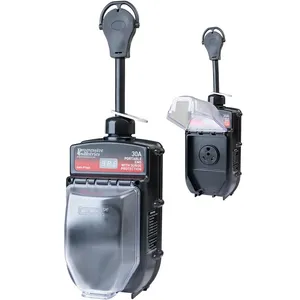
Progressive EMS-PT30X
EMS-PT30X
Protection per pound spent. No radios, no app, published thresholds.
$$$
Check price at Amazon(opens in a new tab)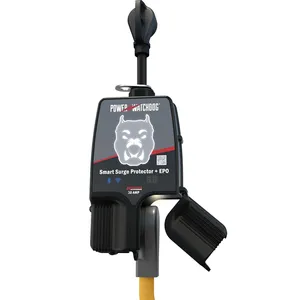
Power Watchdog Gen II (30A)
PWD30EPOW
More surge headroom, WiFi and Bluetooth reporting, replaceable module.
$$$$$
Check price at Amazon(opens in a new tab)Specification by specification
| Specification | Progressive EMS-PT30X | Power Watchdog Gen II (30A) |
|---|---|---|
| Joule rating Surge energy absorbed before degrading | 1,790 | 3,000 Better |
| Max surge current Progressive publishes this figure; Hughes does not | 44,000A | — |
| Full EMS protection | Yes | Yes |
| Low-voltage cutoff Progressive publishes the threshold and the delay | Below 104V for more than 6 seconds Better | — |
| High-voltage cutoff Staged response rather than a single trip point | Above 132V (staged; immediate above 156V) Better | — |
| Replaceable surge module | No | Yes Better |
| Emergency power off | — | Yes Better |
| Bluetooth | No | Yes Better |
| Wifi Check the rig from outside Bluetooth range | — | Yes Better |
| Weather rating Hughes publishes an IP rating; Progressive does not | — | IP65 Better |
| Display On-unit codes against phone-only | Digital error-code display | Via smartphone app |
| Operating temperature | -40°C to +105°C | — |
| Warranty Both lifetime, both non-transferable. Progressive adds an authorised-dealer condition; Hughes does not state one | Lifetime, non-transferable, original owner only, and only on units bought from an authorised dealer or retailer | Limited lifetime, original purchaser only (does not transfer) |
| Price | $$$ Better | $$$$$ |
Where they genuinely differ
Three differences matter. Everything else is noise.
Surge headroom. 3,000 joules against 1,790 is a real gap, and it means the Power Watchdog’s varistors will survive more absorbed energy before they are spent. Worth having. Worth the price difference on its own? No — because surges are the rarer threat, and both units handle the common one.
What the unit can tell you. The Progressive shows an error code on the unit, at the pedestal, which means walking over to read it. The Power Watchdog reports live voltage, amperage and wattage to your phone over Bluetooth and WiFi. The WiFi part is the meaningful upgrade over the previous generation: you can check the rig while you are out for the day, which is precisely when a voltage problem is useful to know about and impossible to observe.
Published detail. This one cuts the other way. Progressive documents exactly what it does: disconnect below 104V sustained for six seconds; on the high side, above 132V it waits three seconds, above 140V it acts within one second, above 156V it disconnects within 60 milliseconds. Hughes publishes the fault categories it covers but far less of the timing behaviour. For a device whose entire job is knowing when to act, that is a genuine difference in transparency — and it is the reason the Progressive takes the voltage rows above despite the Hughes being the more expensive unit.
Where they are effectively the same
Worth stating, because the marketing on both sides implies otherwise.
- Both are full EMS units. Both disconnect on high and low voltage, open ground, open neutral and reverse polarity. Neither is a basic surge suppressor. If protection is what you are buying, you are buying the same thing twice.
- Both carry a lifetime warranty, and both are non-transferable. This used to favour Progressive clearly; Hughes now states lifetime cover too. Read the conditions on either before assuming you are covered — Progressive additionally requires purchase from an authorised dealer, and owners have reported claims refused on that basis. Buying either second-hand gets you no warranty at all.
- Both are portable 30 amp units with hardwired variants available.
- Neither has been tested by us. Everything above comes from manufacturer documentation and published specifications.
The replaceable module argument
The Power Watchdog’s distinguishing design choice is that its surge module is a cartridge. Take a large hit, order a module, carry on.
Every other unit in this category is disposable in that sense. Once the varistors are spent, the protection is gone — the unit keeps passing power, but it is no longer protecting anything. Progressive at least tells you this has happened via a surge failure indicator and the E-10 code, which is more than most units manage.
How much is that worth? Honestly: less than it sounds for most owners. Spending a surge module is not an annual event. It is worth something if you camp somewhere with genuinely poor supply, and close to nothing if you do not.
The monitoring argument
This is the actual decision, so be honest with yourself about it.
Remote monitoring is genuinely useful in one specific situation: you are away from the rig, the campground supply sags, and you would like to know before your air conditioner has spent four hours drawing high current at low voltage. WiFi makes that possible in a way Bluetooth alone never did.
It is useless if you do not open the app. And a great many people who buy monitoring features open the app twice in the first week and never again.
If you know from experience that you are the sort of person who checks, the Power Watchdog earns its premium. If you are buying it because the feature list is longer, you are paying a large amount for a notification you will not read.
The price reality
The Power Watchdog Gen II with EPO sits at roughly two to three times the Progressive’s street price. That is not a small premium on a component whose protective function is broadly equivalent.
Put differently: the difference between these two units is close to the entire cost of a second Progressive. If you have two rigs, or a rig and a home shore connection, buying two Progressives protects more equipment than buying one Power Watchdog.
Which one, by scenario
Stop at the first line that describes you.
-
You want protection and do not care about apps
Progressive EMS-PT30X
The clear answer. Same protection categories, published thresholds, much lower price.
-
You leave the rig for whole days with the air conditioning running
Power Watchdog Gen II
The WiFi monitoring is genuinely useful here and Bluetooth alone would not be.
-
You camp regularly at parks with known poor supply
Power Watchdog Gen II
More surge headroom and a replaceable module both start to matter at that exposure.
-
You are protecting a rig you rarely take to campgrounds
Progressive EMS-PT30X
Low exposure. Buy the protection, skip the telemetry.
-
The rig is a keeper and you are tired of carrying a unit in and out
Look at hardwired instead
Both brands offer hardwired variants. Nothing to steal and nothing to forget.
The verdict
Progressive Industries EMS-PT30X for most people. It protects against the same faults, publishes more about how it does so, carries the same lifetime warranty, and costs a fraction of the price. On protection per pound spent it is not close.
Hughes Power Watchdog Gen II if remote monitoring is a feature you will actually use — specifically if you leave the rig unattended with loads running. The WiFi is the real upgrade, the extra 1,210 joules are a genuine bonus, and the replaceable module means a bad night costs a cartridge.
What should not decide it: joule ratings alone, feature-list length, or the assumption that the more expensive unit protects better. It does not.
Related guides
- EMS vs surge protector — the bigger question, if you have not settled it yet.
- Hughes Power Watchdog review — the Gen II unit in detail, including two clauses in the documentation worth knowing before you buy.
- Progressive EMS-PT30X review — the staged voltage response in full, and the warranty conditions that have caught owners out.
- Surge Guard vs Progressive — the third brand worth considering, and the warranty claim that does not hold up.
- Best RV surge protectors — eight units across both amperages, including Surge Guard and hardwired options.
- RV surge protector error codes — Progressive’s E-codes in full, which is what you will be reading if you buy that one.
- 30 amp vs 50 amp RV — make sure you are buying for the right service before you buy either.
- Why does my RV breaker keep tripping? — neither of these will fix an overload, and it is worth knowing the difference before you spend anything.
Questions worth answering
Is the Power Watchdog worth the extra money over the Progressive?
Only if you will use the monitoring. Both units protect against the same categories of fault, and both carry a lifetime warranty. The premium buys WiFi and Bluetooth reporting, an emergency power off, and a replaceable surge module — not fundamentally better protection.
Which has more surge protection?
The Power Watchdog Gen II, at 3,000 joules against the Progressive EMS-PT30X's 1,790. That is a real difference in headroom, though joules only measure how much surge energy a unit can absorb before degrading — not how well it protects against the voltage problems that cause most RV damage.
Do both disconnect on low voltage?
Yes. Both are full Electrical Management Systems, not basic surge suppressors. Progressive publishes its thresholds in detail — below 104V sustained for six seconds, with a staged response on high voltage. Hughes publishes the fault categories but less of the timing detail.
What happened to the older Bluetooth-only Power Watchdog?
Hughes replaced it with the Gen II range, which adds WiFi. The older PWD30-EPO is still stocked by some retailers but no longer appears on Hughes' own site, so we do not recommend buying one new.
Is the replaceable surge module a real advantage?
Yes, though a modest one for most owners. Varistors degrade with every surge they absorb, and on most units that eventually means replacing the whole thing. On the Power Watchdog it means a cartridge. How much that is worth depends on how often you expect to take a hit.
Which should I buy for a 50 amp rig?
The same reasoning applies to the 50 amp versions — the Progressive EMS-PT50X and the Power Watchdog Gen II PWD50EPOW. The price gap is similar and so is the trade-off.