If you plug into campground pedestals, yes. Not primarily because of lightning — because campground supply is frequently out of range, occasionally miswired, and your insurance most likely will not cover the result.
But before you buy anything, spend five minutes checking whether your rig already has protection. A meaningful number of people buy a second one they did not need, and a larger number believe they are protected when they are not.
First: check what you already have
This is the step almost everyone skips, and it goes both ways — some people buy a unit they did not need, and rather more believe they are protected when they are not.
Five minutes of checking
-
Find your transfer switch, if you have one
Usually in a bay or near the distribution panel. Motorhomes with generators nearly always have one; towables usually do not.
-
Read the model number, not the brand name
This is the trap. Surge Guard 41300 (30A) and 40100 (50A) are basic automatic transfer switches with no surge protection at all — despite "Surge Guard" being printed on them. Surge-equipped versions are a separate, more expensive option that many manufacturers did not fit.
-
Check the build sheet
Your rig's original build or option sheet will list whether electrical protection was specified. Manufacturers frequently offer it as a cost option rather than standard.
-
Work out what any built-in unit actually does
Some transfer switches include surge suppression only. Some include full EMS behaviour with voltage disconnect. These are very different levels of protection and the difference is not obvious from the outside.
As a rough guide: many Class A motorhomes have protection combined with the transfer switch. Smaller Class B and C motorhomes may or may not. Travel trailers and fifth wheels usually have nothing at all.
What actually gets damaged
Not what most people picture. The dramatic lightning strike is the rare case. The routine one is sustained low voltage on a busy afternoon, which makes motors draw more current, run hotter, and fail early.
| What fails | Why | Typical replacement |
|---|---|---|
| Rooftop air conditioner | Compressor fed low voltage overheats | The expensive one |
| Converter / charger | Voltage outside its input range | Moderate |
| Fridge control board | Spike or bad supply | Moderate, often back-ordered |
| Entertainment and electronics | Spike, or open neutral | Varies |
| Inverter | Bad supply on the input side | Moderate to high |
Published estimates for RV electrical repair commonly fall in the $500 to $3,500 per component range. Treat that as an order of magnitude rather than a quotation — the point is that one failure typically exceeds the cost of the protection several times over.
The failure that ought to worry you most is the slow one. A compressor degraded across a hot season does not announce itself, and when it dies the cause is rarely identified as electrical.
The insurance gap
This is the part that changes the calculation, and it is almost never mentioned in articles like this one.
| What it handles | Usually covered | Usually not covered |
|---|---|---|
| Lightning strike | Yes, comprehensive | — |
| Storm or fallen tree damage | Yes, comprehensive | — |
| Collision-related electrical damage | Yes | — |
| Faulty campground pedestal wiring | — | Typically excluded |
| Sustained low or high voltage from park supply | — | Typically excluded |
| Damage attributed to lack of upkeep | — | Excluded |
| Any claim | Minus your deductible | — |
Progressive Insurance — no relation to Progressive Industries, whose surge protectors appear elsewhere on this site — states the position plainly in its own guidance: if a surge was caused by damaged outlets at your campground or RV park, an RV policy typically will not cover the damage. Damage from negligence or faulty wiring is not likely to be covered either.
So the most common cause of RV electrical damage is the one your policy is least likely to pay for. And even where cover applies, it applies minus your deductible — which on many policies is a meaningful fraction of what an EMS costs in the first place.
How likely is this, honestly?
Being straight about it: most RV owners will not experience a catastrophic electrical failure in a given season. Plenty go years without incident. Anyone telling you it is a certainty is selling something.
What is genuinely common:
- Voltage sag on busy afternoons. Not occasional. Normal, at capacity, in hot weather.
- Wiring faults in older parks. Reverse polarity and open grounds are what you find when connections have been baked, frozen and patched for decades.
- Cumulative exposure. The risk is per-connection, and it compounds across a season of hookups.
Actual surges are the rarest of the threats and the one the category is named after — which is a good indication of how much marketing has shaped the way people think about this.
When you genuinely do not need one
The honest counter-case, because “everyone needs one” is not advice.
- You boondock almost exclusively. No pedestal, no exposure. Your risks live elsewhere in the electrical system.
- You run off a generator you own and maintain. You control the supply. Generators can drift out of range, but you are not gambling on unknown wiring.
- The rig is stored on a domestic outlet and barely travels. House supply is far more predictable than a campground post.
- Your rig already has a genuine EMS built in. Confirmed by model number, not assumed from a brand name.
If two or more of those describe you, a basic unit or nothing at all is a defensible decision rather than a mistake.
The cost of being wrong
An EMS for a 30 amp rig costs roughly what a single evening out costs a few times over. A rooftop air conditioner costs considerably more than that, and takes longer to replace than it takes to want it back.
The calculation is not “will this definitely save me money” — it will not, most seasons. It is closer to buying a smoke alarm: cheap, boring, and only ever worth it once.
So, do you?
Stop at the first line that describes you.
-
You have confirmed a genuine EMS is already built in, by model number
You are covered
Do not buy a second one. Confirm it is an EMS, not surge suppression alone.
-
You plug into campground pedestals more than a few times a year
Buy an EMS
This is most RV owners. Voltage problems are the normal case, not the edge case.
-
Your rig has residential appliances, two air conditioners, or a residential fridge
Buy an EMS, and consider hardwired
More expensive equipment behind the panel means a larger loss when park power misbehaves.
-
You boondock almost exclusively
A basic unit is enough
Protect the few times you do plug in without overspending on exposure you do not have.
-
The rig lives on a home outlet and travels rarely
A basic unit, or nothing
Domestic supply is predictable. Spend the money elsewhere.
If the answer is yes
The next question is which type, and it matters more than which brand — a basic surge protector and an EMS are different products at similar-sounding prices. We cover that in EMS vs surge protector.
If the answer is yes, start here
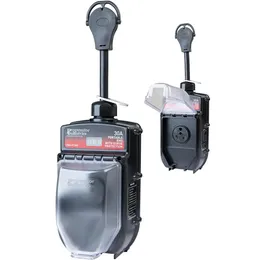
Progressive EMS-PT30X
Full protection for a 30 amp rig at the lowest sensible price.
The 50 amp equivalent
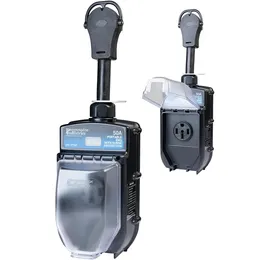
Progressive EMS-PT50X
Same protection logic across both legs of 50 amp service.
If the budget will not stretch
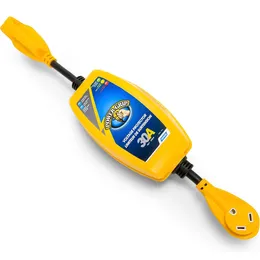
Camco 55301
Surge suppression and a voltage disconnect. Much better than nothing, well short of an EMS.
Related guides
- EMS vs surge protector — the decision that matters more than brand.
- Best RV surge protectors — eight units compared once you have decided.
- Hardwired vs portable — form factor, and why it changes nothing about protection.
- Why does my RV breaker keep tripping? — if something is already going wrong, start here instead.
- Surge Guard vs Progressive — and if you were counting on a warranty to cover the damage, read this first.
- 9 buying mistakes — worth a read once you have decided to buy something.
Questions worth answering
Do I need a surge protector if I only stay at nice campgrounds?
It reduces the risk but does not remove it. The most common threat is low voltage, which is caused by demand on the park's supply rather than by poor maintenance — a modern, well-run park on a hot afternoon with every site occupied can still sag below safe voltage.
Doesn't my RV already have surge protection built in?
It might, and it might not. Many Class A motorhomes have protection combined with the transfer switch; towables usually have nothing. The trap is that a basic automatic transfer switch is not a surge protector, even when the brand on it says Surge Guard. Check the model number.
Will my insurance cover it if I skip the protector?
Probably not for the most likely scenario. Comprehensive cover generally applies to surges from a covered peril such as lightning. Damage traced to faulty campground wiring is typically excluded — and faulty campground wiring is the common case.
Is a cheap surge protector better than nothing?
Yes, clearly. It will absorb spikes and some units disconnect on voltage. It will not do what an EMS does, but the gap between a basic unit and nothing is larger than the gap between a basic unit and an EMS.
Do I need one if I only ever run off a generator?
Less urgently, since you control the supply. Generators can still produce out-of-range voltage and frequency, and an EMS will detect that, but your exposure is far lower than someone plugging into unknown pedestals.
What about when the RV is in storage on a home outlet?
A domestic supply is far more predictable than a campground pedestal, so the risk is low. If the rig is plugged in for months at a time to maintain batteries, a basic unit is cheap insurance against the one storm that matters.