Everything you may load into a trailer is its GVWR minus its empty weight — and water counts. On a 7,000 lb trailer that weighs 5,900 lb empty, that is 1,100 lb for water, food, gear and propane together.
When the numbers come out over, the useful question is which change fixes it — and the one to check first costs nothing: tow with the fresh tank empty.
Step 1 of 2 — the trailer's budget
How much is the trailer allowed to carry?
Step 2 of 2 — what goes in it
What you load, and what you could change
The answer
Against GVWR
—
The two levers, in pounds
—
If you swap the batteries
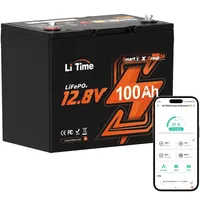
LiTime 12V 100Ah Group 24 Bluetooth LiFePO4 Battery
100Ah · 100% usable · 21.9 lb
Check price at Amazon(opens in a new tab)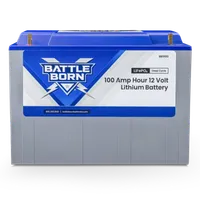
Battle Born 100Ah 12V LiFePO4 Deep Cycle Battery
100Ah · 100% usable · 31 lb
Check price at Battle Born Batteries(opens in a new tab)
Battle Born 100Ah 12V Heated LiFePO4 Deep Cycle Battery Kit
100Ah · 100% usable · 31 lb
Check price at Battle Born Batteries(opens in a new tab)
Battle Born 270Ah 12V GC3 LiFePO4 Deep Cycle Battery
270Ah · 100% usable · 80.8 lb
Check price at Battle Born Batteries(opens in a new tab)The budget is one subtraction
GVWR — gross vehicle weight rating — is the most the trailer is rated to weigh with everything in it. Take the empty weight away and what is left is your budget.
The empty figure is the one to be careful with. A scale ticket is the only number that describes your trailer as it actually sits, with whatever has been fitted to it since it left the factory. If you only have the label, use it, and treat the margin the calculator gives you as the most you have rather than the least.
What your trailer’s federal label already says
This is not our convention. An RV trailer’s cargo capacity label is set by federal rule — 49 CFR 571.110, S9.3.5 — and it has to carry two lines:
THE WEIGHT OF CARGO SHOULD NEVER EXCEED: XXX kg or XXX lbs
CAUTION: A full load of water equals XXX kg or XXX lbs of cargo @ 1 kg/L (8.3 lb/gal)
So the label itself tells you water is cargo, and puts a number on your full tank. The calculator uses 8.34 lb a gallon, which is the same figure unrounded.
Water is the biggest thing you forget to count
Water weighs 8.34 lb a gallon, so a 40 gallon fresh tank is 334 lb — on the trailer in the example above, nearly a third of everything it may carry.
It is also the easiest weight on the rig to remove. Tow with the tank empty and fill it when you arrive, and those pounds come off the budget for the whole drive. Nothing to buy, nothing to leave at home.
If you boondock and have to arrive with water, our water tank calculator will tell you how little you can get away with carrying.
The battery lever is real, and smaller
Lead-acid batteries are heavy, and this is one place where the upgrade really does save weight. The manufacturers’ own figures:
| Renogy 100Ah AGM | LiTime 100Ah lithium | |
|---|---|---|
| Weight | 63.9 lb | 21.9 lb |
| Usable | about half | published as 100% |
Weights from each manufacturer. Lead acid counted at half usable, the same assumption our lithium vs AGM comparison and battery calculator use.
Matching one lithium battery on usable capacity takes two of those AGM batteries — nearly 128 lb against 22. That frees about 106 lb.
Lithium has good reasons to exist — usable capacity, cycle life, voltage that holds up under load — and our lithium vs AGM comparison covers them. Weight is a pleasant side effect, not usually the reason.
The mattress is the other item people forget to weigh. Lippert publishes its RV mattresses from about 40 lb for an 8-inch short queen to 65 lb for a 10-inch king, so replacing one with a larger or thicker one is a real payload change — and getting the size right in the first place is its own problem, because “RV King” is published as three different sizes.
GVWR is not the only limit
A trailer can be inside its GVWR and still over something else. This calculator does not check:
- Axle ratings — the load can be inside GVWR and still sit too heavily on one axle.
- Tire load ratings — and tires have an age limit as well as a load one, which the tire age calculator reads off the sidewall.
- Tongue weight and your tow vehicle’s payload — covered by the towing payload calculator.
- Tire pressure for the load — on a trailer there is nothing to work out: Lionshead says trailer tires “should always be inflated to the maximum PSI indicated on the tire”. A motorhome is different, and our tire pressure calculator sets it from weighed axle ends.
- What the loaded trailer sits on at the site — leveling blocks carry a rating too, 40,000 lb for Tri-Lynx’s and 30,000 lb for Andersen’s leveler, and the leveling block calculator works out how many of them a sloping site needs.
It gives you a margin in pounds. It will not tell you a rig is fine to tow, because one number on one label cannot.
Where this goes wrong
- Leaving water out of the load. The commonest one, and often the largest single item.
- Using a brochure weight when a scale ticket exists. The trailer you own is the one that has to fit inside GVWR.
- Forgetting propane. Count what is in the tanks with everything else — the calculator does not estimate it for you. Weigh a cylinder and take off its empty weight; our propane calculator does that sum and shows what a lighter cylinder saves.
- Buying lithium to fix a weight problem an empty tank would fix for nothing. The tool puts both levers side by side for exactly this reason.
Lightest 100Ah lithium in our records
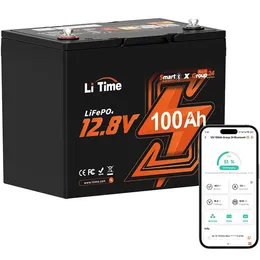
LiTime 100Ah Group 24 BT
21.9 lb for 100Ah, published as fully usable — against 63.9 lb for Renogy's 100Ah AGM, which is only half usable.
Heavier, and still well under lead acid
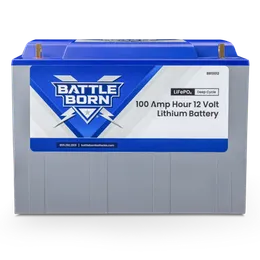
Battle Born BB10012
31 lb for 100Ah, also published as fully usable. Two AGM batteries to match it on usable capacity are nearly 128 lb.
Questions worth answering
How much weight can I put in my travel trailer?
The difference between its GVWR and its empty weight. GVWR is the most the trailer is rated to weigh loaded, so on a 7,000 lb GVWR trailer that weighs 5,900 lb empty, everything you add — water, food, gear, propane — has to fit inside 1,100 lb. Use a scale ticket for the empty weight if you have one; it is the only figure that describes your trailer as it actually sits.
Does water count as cargo weight?
Yes, every gallon of it, at 8.34 lb a gallon — and your trailer's own label says so. Federal rule 49 CFR 571.110 S9.3.5 requires RV trailer cargo labels to carry the caution "A full load of water equals XXX kg or XXX lbs of cargo @ 1 kg/L (8.3 lb/gal)". A 40 gallon fresh tank is 334 lb — against the 1,100 lb budget in this page's example, nearly a third of everything the trailer may carry. It is also the easiest weight to leave behind: tow with the tank empty and fill it when you arrive.
Do lithium batteries save weight in an RV?
Yes, and the numbers are the manufacturers' own. Renogy's 100Ah AGM weighs 63.9 lb and is counted as half usable; LiTime's 100Ah lithium weighs 21.9 lb and is published as fully usable. Matching one lithium on usable capacity takes two of those AGM batteries — nearly 128 lb against 22. That is a real saving of about 106 lb — but emptying a 40 gallon fresh tank frees 334 lb, more than three times as much, for nothing.
Why does the battery calculator suggest more lithium than this page?
Because it is answering a different question. When our battery calculator sizes a new bank it holds 10% of the lithium back as a reserve, so it can round up to one more battery. This page compares a swap like-for-like on the capacity the makers publish. Neither is wrong; one is planning headroom, the other is a weight comparison.
What does this calculator not check?
Axle ratings, tire load ratings, tongue weight and your tow vehicle's payload — any of which can run out before GVWR does. The tow vehicle side, including tongue weight, is on our towing payload calculator, and the tire side is on the tire age calculator.