In winter, tilting RV solar panels is worth more than most guides say. In summer it costs you energy. On NASA’s tilted-surface figures, panels tilted to the latitude collect 37% more than flat panels in December in Orlando, 77% more in Denver and 93% more in Seattle — and in June the same tilt collects 10% to 16% less than lying flat, everywhere.
So the answer depends on where you are parked and when, and the single figure most pages quote — “about 40%” — is wrong in both directions. The calculator works it out for your panels, your place and your month.
Step 1 of 2 — when and where
Where are you parked, and when?
Step 2 of 2 — your panels
What is on the roof, and what do you use?
The answer
—
—
| Month | Flat | Tilted | Change | Best angle |
|---|---|---|---|---|
| January | ||||
| February | ||||
| March | ||||
| April | ||||
| May | ||||
| June | ||||
| July | ||||
| August | ||||
| September | ||||
| October | ||||
| November | ||||
| December |
Other ways to get the same energy
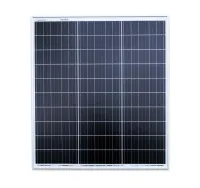
Victron BlueSolar 95W Monocrystalline Solar Panel
770 x 668 x 30 mm
Check price at Victron Energy(opens in a new tab)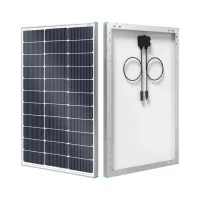
Renogy 100W 12V N-Type Rigid Monocrystalline Solar Panel
34.1 x 22.8 x 1.2 in (865 x 578 x 30 mm)
Check price at Renogy(opens in a new tab)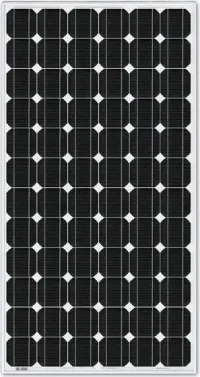
Victron BlueSolar 130W Monocrystalline Solar Panel
1020 x 668 x 30 mm
Check price at Victron Energy(opens in a new tab)Victron BlueSolar 150W Monocrystalline Solar Panel
1485 x 668 x 30 mm
Check price at Victron Energy(opens in a new tab)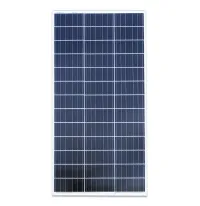
Victron BlueSolar 190W Monocrystalline Solar Panel
1485 x 668 x 30 mm
Check price at Victron Energy(opens in a new tab)Victron BlueSolar 285W Monocrystalline Solar Panel
1550 x 880 x 35 mm
Check price at Victron Energy(opens in a new tab)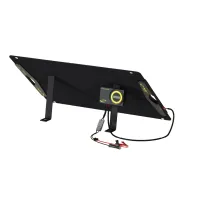
Go Power! DuraLite 100W Portable Solar Kit
Built-in 30A PWM (GP-PWM-30-DL), 12V only
Check price at Go Power!(opens in a new tab)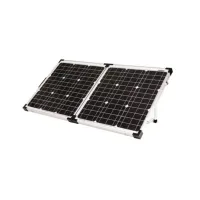
Go Power! 90W Portable Solar Kit
Built-in 10A PWM (GP-PWM-10-FM), 12V
Check price at Go Power!(opens in a new tab)The gain, place by place
NASA’s figures for the fourteen places our solar array calculator covers, with panels tilted to the latitude and facing south:
| Place | Latitude tilt | December | June | NASA’s best December angle |
|---|---|---|---|---|
| Quartzsite, AZ | 34° | +59% | −13% | 59.5° |
| Phoenix, AZ | 33° | +59% | −13% | 60° |
| Los Angeles, CA | 34° | +62% | −13% | 60° |
| Moab, UT | 39° | +71% | −13% | 63.5° |
| Orlando, FL | 29° | +37% | −10% | 52° |
| Denver, CO | 40° | +77% | −12% | 65.5° |
| Austin, TX | 30° | +43% | −11% | 54.5° |
| Asheville, NC | 36° | +58% | −11% | 59° |
| Bend, OR | 44° | +76% | −14% | 64.5° |
| Minneapolis, MN | 45° | +85% | −12% | 68° |
| Bar Harbor, ME | 44° | +88% | −13% | 65.5° |
| Kalispell, MT | 48° | +88% | −14% | 67.5° |
| Seattle, WA | 48° | +93% | −14% | 66.5° |
| Anchorage, AK | 61° | +271% | −16% | 82° |
The further north, the bigger the winter gain, because the winter sun is lower. Anchorage is the extreme: in December a flat panel there barely sees the sun at all, so almost anything tilted is several times better — of very little.
Where “about 40%” comes from, and why it is wrong
Trace the figure most pages repeat and it leads to a 2016 post from a full-time RV couple. For a January at a desert camp in California, it gives 3.40 kWh/m² a day for a flat panel and 5.88 at a 59° tilt — and calls that “42% more power than what the flat panel will produce.”
On its own numbers it is 73% more. 5.88 ÷ 3.40 is 1.73. The 42% comes from dividing the difference by the tilted figure instead of the flat one. Other pages quote “about 40%” or a single owner’s amp reading on one sunny morning. None gives the gain by place and month, and none mentions that in summer the tilt goes the other way.
In summer, tilting costs you
In June the sun is high enough that a flat panel faces it nearly square. Tilt it to the latitude and it points below the sun for much of the day: NASA puts the loss at 10% to 16% across all fourteen places. NASA’s best June angle is between flat and about 10° everywhere in the lower 48, and even at that angle the gain is about 1%.
So the answer to “should I tilt?” has a season in it. From late autumn to early spring, yes. From May to August, leave them flat. In Denver at latitude tilt, the gain runs from +77% in December to −12% in June, and turns negative in May.
Which angle
Fixed side-view examples: 40° tilted and 0° flat. These explain the geometry; they do not change with the calculator.
Lower winter sun
Raise the north edge so the collecting face looks toward the southern sky. A steeper panel can face low winter sunlight more directly.
Higher summer sun
A shallow angle can collect more over a summer day than the same steep winter setting. Use the calculator’s place and month for the comparison.
Tilt and direction are separate. Tilt is 0° when horizontal and 90° when vertical. Direction is where the panel face points: the calculator assumes due south (180° azimuth) at its U.S. locations. The vehicle’s nose does not determine the panel’s direction.
Sun rays are schematic, not a sun-position calculation. Measure from horizontal, which may differ from a sloping roof. Follow the mounting system’s limits and travel/stow instructions; the example is not a bracket setting recommendation.
Angle conventions: Pacific Northwest National Laboratory’s solar-orientation guide.
NASA computes four tilts — latitude minus 15°, latitude, latitude plus 15°, and the best angle for the month — and the calculator offers all four rather than inventing angles between them.
- In winter, steeper than latitude. NASA’s best December angle runs from 52° in Orlando to 68° in Minneapolis. Latitude plus 15° gets within a few percent of it everywhere on the list. In Denver: latitude +77%, latitude plus 15° +91%, NASA’s best angle (65.5°) +94%.
- In spring and autumn, around the latitude. The best angle moves through the latitude in March and September.
- In summer, flat. As above.
If your bracket has one setting, the winter one is the one worth having, because that is when the gain is large and the energy is short.
What the numbers assume
The figures are NASA POWER’s monthly tilted-surface climatology, computed with an isotropic sky model. The calculator applies NASA’s tilted-to-flat ratio to the flat figures the solar array calculator uses, so the two cannot disagree about what a flat roof collects. As a cross-check, NREL’s PVWatts — a different model and dataset — puts Denver’s December gain at a 40° tilt at +98% and its June loss at −15%: larger both ways. NASA’s are the cautious figures, which is the right way for a calculator to lean.
The alternatives to tilting
Tilting is one of three ways to get more from a winter sun, and the calculator prices all three in watts:
- Tilt the panels you have, with brackets that raise them when parked.
- Add flat panels. To match a tilt with more panels lying flat takes another panel watts × the gain — in Denver in December, about 581 W more for a 750 W array, if the roof has room. Our solar array calculator checks whether it does.
- Set out a portable panel facing the sun, which can also keep charging while the rig sits in shade. On a rig with a factory side port, what that port is wired to decides which kits plug in.
One maker’s listing for its portable kit puts it at about 25 Ah a day flat and 31 Ah tilted, for no stated place or month — the same quoted-not-computed habit as the 40%.
Questions worth answering
Is it worth tilting RV solar panels?
In winter, yes, and by more than most guides say. On NASA's tilted-surface figures, panels tilted to the latitude collect 37% more than flat panels in December in Orlando, 77% more in Denver and 93% more in Seattle. In summer, no: at the same angle they collect 10% to 16% less than flat in June, and NASA's best June angle is within ten degrees of flat everywhere in the lower 48.
What angle should I tilt my RV solar panels in winter?
Steeper than most people expect. NASA's best December angle runs from 52° in Orlando to 68° in Minneapolis. Latitude plus 15° gets within a few percent of that everywhere on NASA's list — in Denver it gives +91% against +94% at the best angle, while tilting to the latitude alone gives +77%.
How much more power do tilted RV solar panels make?
It depends on place and month, which is the point. In Denver in December, 750 W of panel returns about 1,250 Wh a day flat and about 2,218 Wh tilted to the latitude, on the same assumptions as our solar array calculator. The calculator above works it out for your panels, place and month.
Does tilting help in summer?
No. In June the sun is high enough that a flat panel faces it nearly square, and tilting to the latitude loses 10% to 16% on NASA's figures. NASA's best June angle is between flat and about 10° across the lower 48, and even that adds about 1%.
Where does the "tilting adds about 40%" figure come from?
Most guides trace to a 2016 RV blog post that compared 3.40 kWh/m² a day flat with 5.88 at a 59° tilt for a January in the California desert, and called it 42% more. On those figures it is 73% more: the difference was divided by the tilted number rather than the flat one. The real gain varies with place and month far more than any single figure suggests.
Is a portable solar panel better than tilting roof panels?
It does the same job differently. A portable panel can be set out facing the sun while the rig sits in shade, and its stand tilts it. Go Power publishes no angle for its kits' folding legs, so no tilted figure is claimed for one here. The calculator shows both options beside the flat-panel alternative.